
How long does private label clothing manufacturer take?
A private label clothing manufacturer can take anywhere from a few weeks to several months to complete an order, depending on the product, order quantity, design complexity, fabric availability, sampling process, and production schedule. There is no single timeline that applies to every clothing brand.For a new fashion business, understanding the production timeline is important because manufacturing is only one part of the journey.
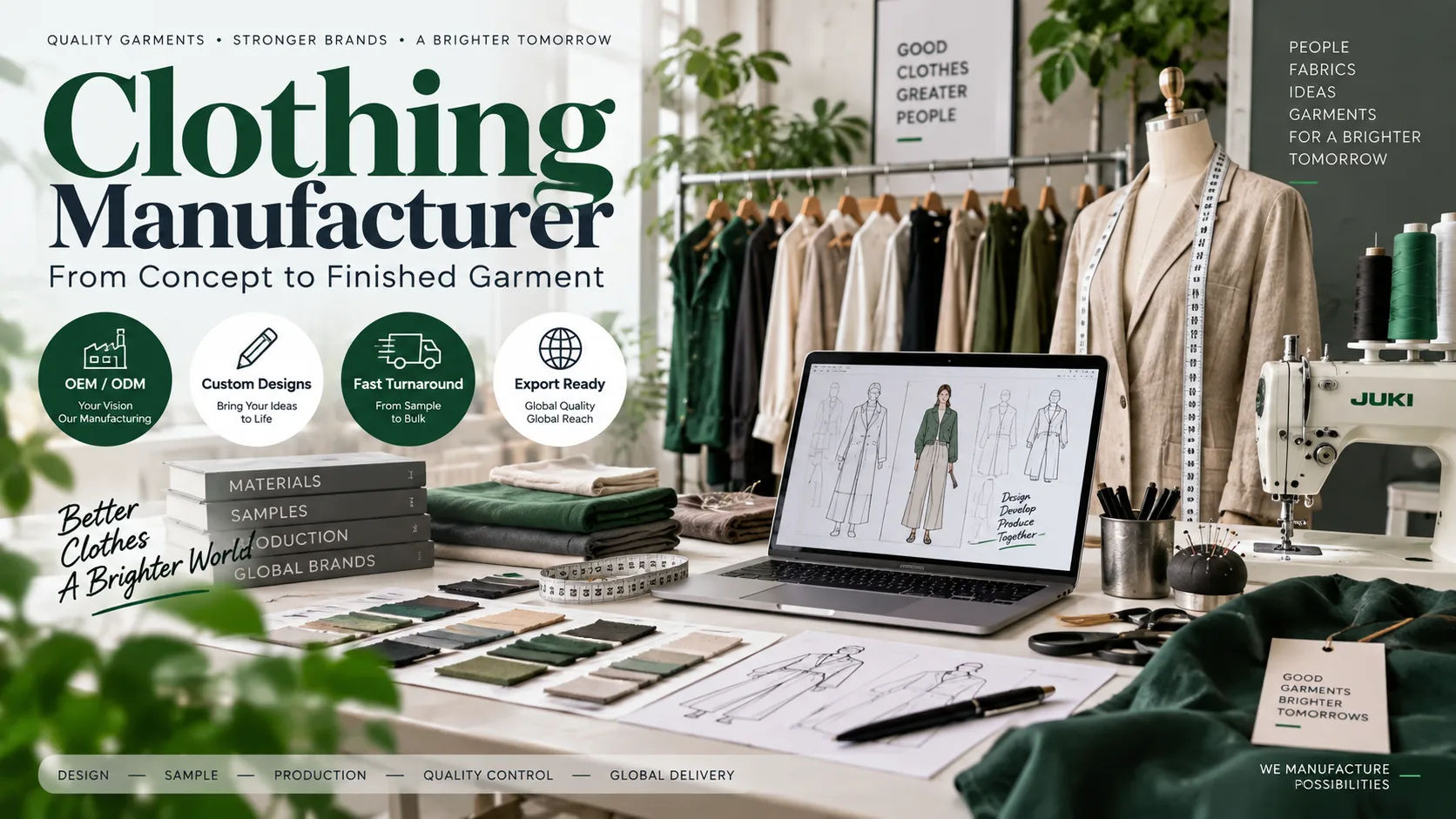
You also need time for design development, fabric selection, samples, revisions, bulk production, quality control, packaging, and shipping.A realistic timeline helps you avoid rushing decisions or promising customers a launch date that your supply chain cannot support.
What Is the Typical Production Timeline?
For a straightforward private label clothing manufacturer order, production may take around 4 to 8 weeks after the final sample and specifications are approved. More complicated collections can take 8 to 12 weeks or longer.
This production period normally does not include every step that happens before manufacturing begins.
For example, if you are creating a collection from scratch, the complete process might look like this:
Design and product development can take several weeks. Sampling may take another 1 to 3 weeks depending on the manufacturer and number of revisions. Once the sample is approved, bulk production begins. After production, the garments need to go through inspection, finishing, packing, and shipping.
This means a project that technically requires six weeks of manufacturing could take three months from the first conversation to delivery.
What Factors Affect Clothing Manufacturing Time?
The biggest mistake new brands make is assuming that the quoted production time is the same as the total project timeline.
Several factors can change how quickly your garments are completed.
Design Complexity
Simple garments are generally faster to manufacture than complicated designs.
A basic T-shirt with a standard neckline, straightforward stitching, and one fabric may be relatively simple. A structured jacket with multiple panels, lining, zippers, pockets, embroidery, special seams, and custom hardware requires considerably more work.
Every additional construction detail creates another opportunity for development, sourcing, and production time.
If speed is your priority, keeping the first collection relatively simple can make the manufacturing process much easier to manage.
Number of Styles
The number of different garments in your collection also affects the schedule.
Producing 500 units of one T-shirt is different from producing 500 units spread across ten different styles.
Each style may require its own pattern, measurements, sample, fabric requirements, trims, labels, and production setup.
A larger collection can therefore take considerably longer even when the total number of garments is not unusually high.
Order Quantity
Order quantity has an interesting effect on production time.
A very small order may seem easier, but some factories prioritize larger production runs because they can organize their production lines more efficiently.
A large order may also require additional production capacity or multiple manufacturing stages.
The best approach is to ask the manufacturer how your specific quantity fits into its normal production schedule rather than assuming that smaller automatically means faster.
Fabric Availability
Fabric sourcing can become one of the biggest causes of delays.
If the required fabric is already available, production can move forward quickly. If the fabric needs to be specially knitted, dyed, printed, or imported, the timeline can increase significantly.
Custom colors can also add time.
For example, a brand requesting a specific shade that is not currently available may need to wait for fabric dyeing before garment production can begin.
This is why fabric availability should be confirmed before you finalize a launch date.
How Long Does Sampling Take?
Sampling is one of the most important stages in the entire process.
A manufacturer normally creates a sample so you can evaluate the design before committing to bulk production.
A basic sample may take around one to three weeks, although complex products can take longer.
The first sample is rarely guaranteed to be perfect.
You may discover that the sleeve is too long, the fabric feels different than expected, the neckline needs adjustment, or the overall fit is not right.
You then provide feedback and request another sample.
Why Sample Revisions Add Time
Every revision can add several days or more to the schedule.
If you request three rounds of changes, you should not expect the project to follow the timeline of a one-sample approval.
This is especially important for new brands that are still developing their sizing and design standards.
The faster you provide clear feedback, the faster the manufacturer can make corrections.
Detailed measurements, reference photographs, technical drawings, fabric specifications, and clear construction instructions can reduce unnecessary back-and-forth.
How Long Does Bulk Production Take?
Once the final sample is approved, specifications are confirmed, and materials are available, bulk manufacturing can begin.
For many standard apparel products, bulk production may take approximately 4 to 8 weeks.
However, this is only a general range.
A manufacturer producing basic casualwear may have a different schedule from a factory specializing in highly detailed fashion pieces.
Production time can also increase during busy seasons.
What Happens During Bulk Production?
Bulk manufacturing involves much more than simply sewing fabric together.
Materials need to be prepared and cut according to approved patterns. Garment components are then assembled through multiple sewing operations.
Depending on the product, manufacturers may also handle printing, embroidery, washing, dyeing, pressing, trimming, labeling, and other finishing processes.
The garments are then checked for defects before being packed.
This is why a production quote should always be understood in context.
Ask what the quoted manufacturing period actually includes.
Does a Private Label Clothing Manufacturer Provide a Faster Timeline?
The answer depends on the manufacturer's capabilities.
Some manufacturers are set up for fast turnaround and maintain commonly used fabrics, trims, and production resources. Others focus heavily on customization and may require more development time.
A manufacturer with an organized sampling and production process can often provide a much more predictable timeline than one that gives vague estimates.
Communication also matters.
If you receive clear answers about materials, samples, production slots, quality control, and shipping, you have a better chance of planning accurately.
Private Label vs. Ready-Made Clothing
There is an important difference between private-label production and purchasing ready-made garments.
Ready-made clothing can sometimes be purchased and branded much faster because the actual garment design already exists.
Private-label manufacturing normally involves some level of customization.
You might choose the fabric, color, measurements, labels, packaging, artwork, or construction details.
The more customization you request, the more development time you should expect.
For a brand launching its first collection, understanding this difference can prevent unrealistic expectations.
How Long Does Shipping Take After Production?
Finishing production does not necessarily mean the garments are immediately in your warehouse.
The shipping method and destination can add additional time.
Air freight is generally faster but more expensive. Sea freight is usually slower but can be more economical for larger shipments.
Customs clearance can also affect delivery.
If your garments are being manufactured internationally, you should build transportation and customs time into your launch schedule rather than treating shipping as an afterthought.
How Can You Reduce Manufacturing Delays?
You cannot eliminate every possible delay, but you can control many of the factors that cause unnecessary problems.
Finalize Your Designs Early
Changing major design details after sampling or production has started can create significant delays.
Before approving the final sample, carefully review measurements, materials, colors, construction, labels, artwork, and finishing requirements.
It is much easier to correct problems before bulk production begins.
Prepare Accurate Specifications
A manufacturer works much more efficiently when the requirements are clear.
Your specifications should communicate measurements, fabrics, colors, trims, artwork placement, labels, stitching requirements, and other important details.
A vague instruction such as "make it oversized" can mean different things to different people.
Specific measurements are far more useful.
Approve Samples Quickly
Delays do not always come from the factory.
Sometimes a manufacturer is waiting for the client to respond.
If a sample arrives on Monday but feedback is not provided until the following week, the project has already lost several days.
Prompt communication can make a noticeable difference.
Confirm Materials Before Production
Do not assume that the fabric or trims you selected are automatically available.
Ask whether the manufacturer has them in stock, whether they need to be sourced, and how long sourcing will take.
This is particularly important for custom fabrics and unusual colors.
Allow Buffer Time
Even a well-managed production schedule can encounter unexpected problems.
Machines may require maintenance. Materials can arrive late. A production line can become overloaded. Quality issues may require rework.
Instead of planning your launch around the earliest possible delivery date, leave some additional time between expected production completion and your actual launch.
That buffer can protect you from avoidable pressure.
What Should You Ask a Manufacturer About Timing?
Before placing an order, ask for a timeline that separates the major stages.
Ask how long the initial sample will take, how revisions are handled, when fabric and trims will be sourced, when bulk production can begin, how long production is expected to take, when quality inspection occurs, and how finished goods are prepared for shipment.
It is also useful to ask what happens if production falls behind schedule.
A professional manufacturer should be able to explain its process clearly.
You should be cautious about extremely short promises that sound unrealistic, particularly when the order involves extensive customization.
A fast quote is not necessarily a fast delivery.
A Realistic Example of a Clothing Production Schedule
Imagine a new brand wants to produce a collection consisting of several customized T-shirts and hoodies.
The design and specification stage could take one to two weeks.
Initial samples might take another two weeks. If the brand requests revisions, another one or two weeks may be required.
After final approval, fabric and trims need to be confirmed. Bulk production could then take four to eight weeks.
Quality control and packing may require several additional days.
Shipping could take anywhere from several days to several weeks depending on the chosen transportation method and destination.
In practice, the entire project could easily take 8 to 14 weeks or more from development to final delivery.
This example is not a guaranteed schedule. It simply shows why the manufacturing stage should not be viewed in isolation.
When Should You Contact a Manufacturer?
You should contact manufacturers well before you need your finished products.
If you are planning a seasonal collection, work backward from your intended launch date.
For example, if you want products available for a major seasonal sales period, you should not wait until immediately before that season to begin development.
Give yourself enough time for sampling, revisions, production, inspection, shipping, and unexpected delays.
Experienced clothing brands often think in terms of the entire supply chain rather than simply asking, "How many weeks will production take?"
That broader approach makes planning much more reliable.
What If You Need a Faster Turnaround?
If speed is extremely important, consider simplifying your first order.
Using readily available fabrics and standard garment constructions can reduce development time.
Reducing the number of styles can also make production easier to coordinate.
You can still customize important brand elements such as labels, colors, prints, and packaging without making every part of the garment completely unique.
Another option is to ask the manufacturer whether it offers expedited production.
However, faster production may involve additional costs, and not every factory can accommodate rush orders.
Never assume that paying more automatically guarantees an earlier delivery date.
Questions to Ask Before Placing an Order
Can the production timeline be guaranteed?
Ask whether the quoted timeline is an estimate or a committed production schedule.
A realistic estimate is usually more useful than an overly confident promise.
Does production time include sampling?
Some quotes refer only to bulk manufacturing.
Make sure you understand whether sampling and revisions are included separately.
What could cause delays?
Ask specifically about fabric sourcing, trims, production capacity, quality issues, holidays, and shipping.
Understanding potential problems before ordering gives you more control.
When does the production clock actually start?
For some orders, production begins only after the final sample, payment, materials, and specifications have all been approved.
Clarifying this point prevents misunderstandings.
How long will shipping take?
Production completion and final delivery are two different dates.
Always ask for an estimated shipping period and understand whether customs clearance is your responsibility.
Conclusion
So, how long does a private label clothing manufacturer take?
For many standard apparel projects, bulk production may take around four to eight weeks after everything has been approved and materials are ready. But the complete process can take eight to fourteen weeks or longer once design development, sampling, revisions, quality control, and shipping are included.
The most important thing is not finding the shortest advertised timeline. It is finding a realistic schedule that the manufacturer can actually maintain.
A well-planned project starts with clear specifications, realistic quantities, available materials, approved samples, and consistent communication. If you build extra time into your schedule and understand every stage of production, you are much less likely to face an unexpected delay just before launch.
Ultimately, manufacturing time depends on what you are making and how customized it needs to be. A simple garment with readily available materials may move quickly, while a complex collection with custom fabrics, detailed construction, multiple revisions, and international shipping requires considerably more patience. Plan for the complete production journey, not just the number of weeks quoted for sewing.