Child-resistant packaging is designed to make accidental access more difficult for young children while still allowing adults to use the package correctly. This balance is important because packaging that is too easy to open may fail its safety purpose, while packaging that is unnecessarily difficult can create problems for adults, older users, or people with limited hand strength. 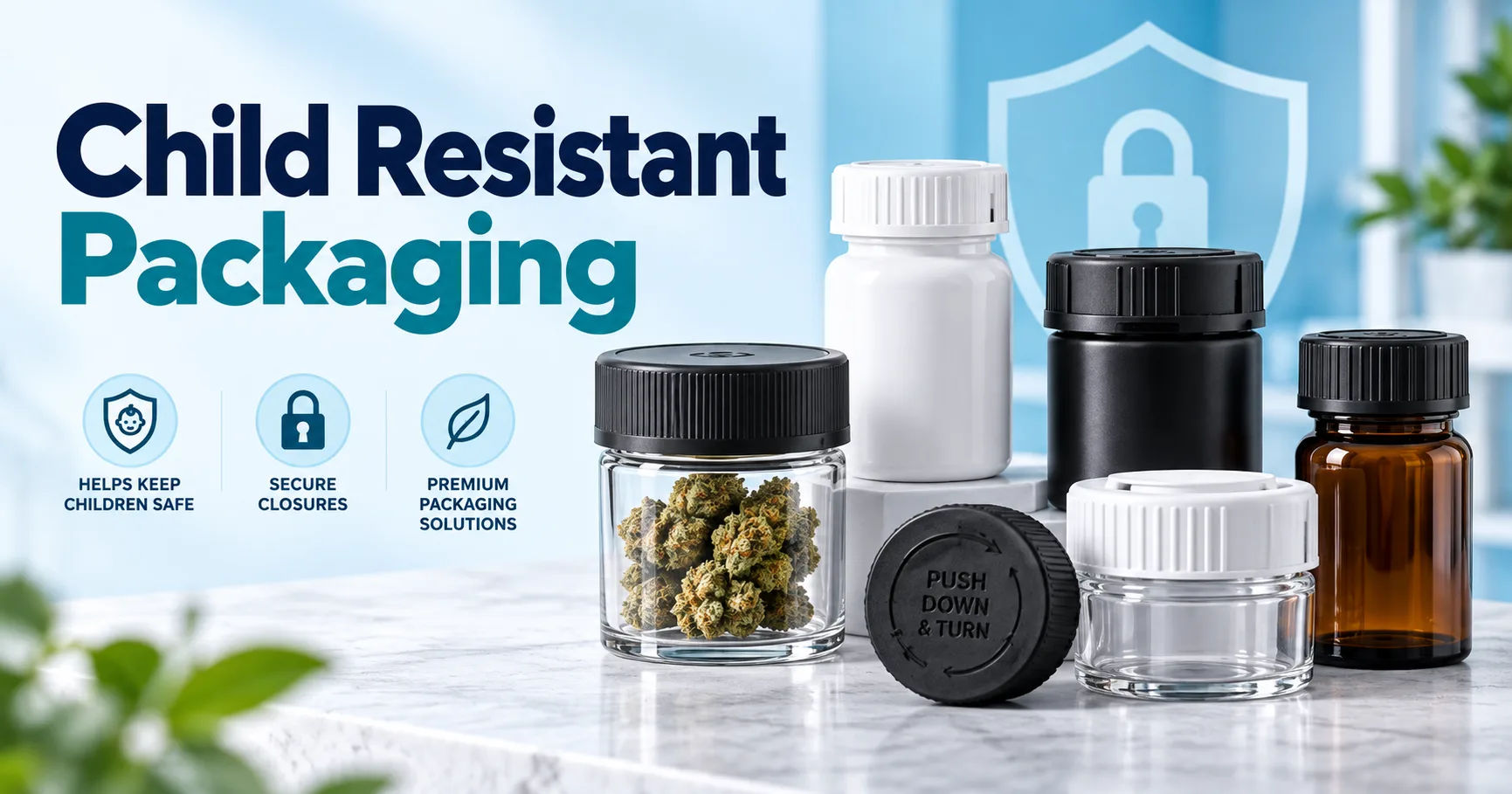 A Child Resistant Packaging Company must therefore look at much more than the appearance of a bottle, pouch, carton, closure, or container.
The company has to consider the product inside, the package design, materials, opening mechanism, manufacturing process, testing requirements, and regulations that apply to the market where the product will be sold.
Standards also provide a consistent way to determine whether packaging actually performs as intended. In the United States, for example, the Poison Prevention Packaging Act and its implementing regulations establish requirements for certain products that need special packaging. The Consumer Product Safety Commission explains that these requirements are found in 16 CFR Part 1700.
The goal is not to make a package impossible for children to open. Instead, the goal is to make it significantly difficult for children under five while keeping it reasonably usable by adults.
The Main Child-Resistant Packaging Standards
A manufacturer cannot simply place a child-resistant label on a package and assume that the package meets regulatory requirements. The package needs to be designed and evaluated against the applicable requirements.
Different countries and product categories can use different standards. A company serving several markets must understand these differences before selecting a packaging system.
U.S. Poison Prevention Packaging Requirements
In the United States, the Poison Prevention Packaging Act of 1970 is a major part of the regulatory framework for child-resistant packaging. The CPSC states that special packaging must be significantly difficult for children under five to open within a reasonable time while not being difficult for normal adults to use properly.
Under the CPSC's current explanation of the testing requirements, at least 85% of tested children must be unable to open the package during the first five minutes, and at least 80% must remain unable to open it during the full ten-minute test. Adult users are also tested, with at least 90% expected to open the package within five minutes under the applicable protocol.
These figures demonstrate why testing is so important. A package may look highly secure during a design review but still fail when real test participants interact with it.
ISO Standards for International Markets
International projects may involve ISO standards rather than, or in addition to, U.S. requirements.
ISO 8317:2015 specifies performance requirements and testing procedures for reclosable packages designated as resistant to opening by children. It evaluates both resistance to child opening and accessibility by adults.
For non-reclosable pharmaceutical packaging, ISO 14375:2018 provides requirements and testing procedures. The standard is intended for type approval rather than routine quality assurance.
ISO 28862:2018 covers non-reclosable child-resistant packaging for non-pharmaceutical products. It establishes performance requirements and testing procedures for single-use packages in this category.
This means that a Child Resistant Packaging Company needs to identify the correct standard before testing begins. Choosing the wrong test method can create unnecessary delays and may not provide the evidence needed for a particular market.
Designing Packaging Around the Product
Compliance begins long before a package reaches a testing laboratory.
A Child Resistant Packaging Company first needs to understand what the package will contain and how consumers will use it. A liquid chemical, medication, powder, cosmetic, or household product may require very different packaging characteristics.
The product can affect the closure, liner, seal, material selection, and long-term performance of the package.
For example, a chemical substance could interact with a plastic component or closure over time. A liquid product may require a restricted-flow design. A solid product may need a different opening mechanism.
The package also needs to work throughout its expected life. CPSC guidance notes that applicable special packaging requirements can include continued effectiveness throughout the product's use and protection against the contents interfering with package performance.
Choosing the Right Opening Mechanism
Child-resistant packaging can use different mechanisms to make opening more difficult for young children.
Some designs require the user to push and turn simultaneously. Others may require squeezing, aligning, sliding, lifting, or performing another coordinated action.
The important point is that the mechanism should create a meaningful barrier without making normal adult use unreasonable.
A package that requires excessive force may create complaints and usability problems. A mechanism that is too simple may not provide adequate child resistance.
The design process therefore involves balancing safety, ergonomics, manufacturing requirements, and consumer convenience.
Testing Is at the Center of Compliance
A Child Resistant Packaging Company must treat testing as a critical part of development rather than something added at the end.
Testing can identify weaknesses that are difficult to predict from drawings or prototypes. A closure may perform well in an engineering environment but behave differently when handled repeatedly by different people.
In the U.S., the testing protocols are established under 16 CFR §1700.20. CPSC specifically identifies these protocols for determining whether packaging meets the applicable child-resistant and adult-friendly requirements.
Child Testing
The child portion of the testing process is designed to evaluate whether young children can open the package within the specified testing period.
The purpose is not to test whether one unusually persistent child can eventually defeat a package. Instead, the standardized procedure uses defined participant groups and testing conditions so that results can be evaluated consistently.
The current CPSC description identifies children under five as the relevant population for special packaging testing and establishes specific opening thresholds.
Adult Testing
Child resistance alone is not enough.
Adults must also be able to use the package correctly. If a closure is extremely difficult for adults, consumers may leave it open, transfer the product into another container, or stop using the safety mechanism correctly.
CPSC requirements therefore include adult testing. Under the agency's current guidance, at least 90% of tested adults must be able to open the package within five minutes, with additional requirements applying where the package needs to be resecured.
This is why the phrase "child-resistant" should not be confused with "child-proof." The objective is controlled difficulty, not absolute impossibility.
Prototype Development and Engineering Controls
Before formal testing, manufacturers generally need working prototypes.
A Child Resistant Packaging Company may create several closure designs and evaluate how each one performs. Engineers can examine opening force, torque, alignment, material behavior, seal performance, dimensional tolerances, and repeated-use characteristics.
Prototype testing can prevent a company from sending a poorly developed package into formal testing.
Small changes can matter. The thickness of a component, shape of a grip surface, spring force, thread design, or tolerance between components can affect how the package opens.
For this reason, packaging development should be treated as an engineering process rather than simply a graphic or marketing exercise.
Quality Control During Manufacturing
Passing a qualification test does not mean every package produced afterward will automatically perform identically.
Manufacturing consistency is therefore essential.
A Child Resistant Packaging Company needs controls that help keep critical dimensions and components within approved specifications. Injection molding, forming, assembly, closure application, sealing, and other production processes can introduce variation if they are not properly controlled.
Quality checks can include dimensional inspections, visual checks, functional testing, torque measurements, seal evaluations, and other controls appropriate to the package.
The exact quality system depends on the product and market. Pharmaceutical packaging, for example, can involve additional regulatory expectations related to container closure systems and manufacturing controls.
The FDA explains that child-resistant packaging claims for applicable drug products should be supported by verification that the packaging meets the relevant CPSC standards, and firms are advised to retain supporting data.
Documentation and Test Records
Compliance also depends on documentation.
A Child Resistant Packaging Company should maintain clear records showing how the package was designed, tested, approved, and manufactured.
Documentation may include specifications, drawings, material information, test reports, production records, quality-control procedures, and change-control records.
Good documentation makes it easier to demonstrate that the package being manufactured corresponds to the package that was evaluated.
This becomes particularly important when a company changes materials, suppliers, closure components, dimensions, or manufacturing methods.
A seemingly minor change can affect package performance. Changes should therefore be reviewed rather than assumed to be harmless.
Considering the Product's Entire Life Cycle
Packaging standards are not only about whether a new package works on the day it leaves the factory.
The package may experience transportation, storage, temperature changes, humidity, repeated opening and closing, handling, and exposure to the product inside.
A Child Resistant Packaging Company needs to consider these conditions during development.
A closure that performs properly under laboratory conditions may behave differently after months of storage or repeated consumer use.
Material compatibility is also important. The substance inside the container should not compromise the package's ability to meet its required specifications.
CPSC guidance specifically identifies continued effectiveness over the product's life and the potential interaction between the package and its contents as relevant special-packaging considerations.
Restricted-Flow and Other Safety Features
Some products require more than a difficult-to-open closure.
For certain regulated substances, special packaging requirements can include restricted-flow mechanisms. These mechanisms are intended to limit the amount of product that can be obtained through a single activation.
CPSC explains that, where the requirement applies, the package must not allow more than 2 mL of contents to be obtained when the inverted, opened package is taken or squeezed once or otherwise activated once.
This illustrates an important point: child-resistant packaging is not always just about the cap.
The entire package system may need to contribute to reducing access.
Separating Child Resistance From Tamper Evidence
Child resistance and tamper evidence are related to product safety, but they are not the same thing.
Child-resistant features are intended to make access difficult for young children. Tamper-evident features are intended to provide visible evidence that a package may have been opened or disturbed.
A Child Resistant Packaging Company may incorporate both features when the product and regulations call for them.
A tamper-evident seal does not automatically make a package child-resistant. Likewise, a child-resistant closure does not automatically provide evidence of tampering.
The functions need to be evaluated separately.
How Companies Prepare for Formal Testing
A sensible development process usually begins with regulatory research.
The company identifies the destination market, product category, package type, applicable regulations, and relevant testing standard.
Next, engineers develop the package and conduct internal evaluations.
After the design is refined, formal testing can be performed using the applicable protocol.
If the package fails, the result should be treated as development information rather than simply as a manufacturing problem. Engineers need to determine why it failed and modify the design appropriately.
A Child Resistant Packaging Company may then repeat testing after the necessary changes.
CPSC maintains information about firms that conduct child-resistant package testing under the applicable federal testing provisions, while also making clear that CPSC does not approve, certify, or endorse those testing firms.
Why Standards Can Differ by Product and Market
One of the most common mistakes is assuming that one test automatically covers every possible product.
Standards can vary according to the type of package, whether it is reclosable or non-reclosable, the product category, and the destination market.
For example, ISO 8317 addresses reclosable child-resistant packages, while ISO 14375 addresses non-reclosable pharmaceutical packages. ISO 28862 covers non-reclosable packages for non-pharmaceutical products.
A Child Resistant Packaging Company serving international customers should therefore avoid using a generic statement such as "this package meets all child-resistant standards."
Compliance claims should identify the applicable requirements and the evidence supporting them.
Common Problems That Can Cause Compliance Issues
Several issues can create problems during development.
Poor dimensional control is one example. A closure can perform differently if its components are outside the intended tolerances.
Another problem is changing materials without evaluating the effect of the change.
Manufacturing changes can also affect performance. A new supplier, molding process, assembly method, or closure application setting may produce a package that differs from the tested configuration.
User instructions matter as well. Some child-resistant packages need to be correctly closed after use. FDA consumer guidance emphasizes that a child-resistant closure cannot provide its intended protection if users fail to re-lock it after opening.
The Role of Ongoing Compliance
Compliance should not end when a package passes its initial evaluation.
A Child Resistant Packaging Company needs an ongoing system for monitoring design changes, suppliers, production processes, complaints, and package performance.
If a component becomes unavailable and the company substitutes another material, the change should be assessed.
If consumers report that a closure is unusually difficult or unusually easy to operate, the information may deserve investigation.
Continuous quality management helps ensure that the package used by consumers remains consistent with the package that was originally evaluated.
What Businesses Should Ask a Packaging Supplier
Companies purchasing child-resistant packaging should ask specific questions before placing a large order.
They should ask which standard applies to the proposed package and which market the testing covers.
They should also ask whether testing was conducted on the exact package configuration being supplied.
It is useful to understand whether the testing covered the complete package or only a particular closure component.
Businesses should also request appropriate test documentation and understand how material or manufacturing changes will be managed.
A professional Child Resistant Packaging Company should be able to explain its testing approach clearly without relying on vague claims such as "industry standard" or "tested for safety."
Conclusion
Meeting child-resistant packaging standards requires a combination of regulation, engineering, testing, manufacturing control, documentation, and ongoing quality management. It is not enough for a container to look secure or for a closure to feel difficult to open.
A Child Resistant Packaging Company must first determine which requirements apply to the product and market. In the United States, this can involve the Poison Prevention Packaging Act and requirements in 16 CFR Part 1700. International projects may involve standards such as ISO 8317, ISO 14375, or ISO 28862 depending on the package and product category.
Testing is central to the process because it provides objective evidence about how children and adults interact with the package. The package must provide meaningful resistance to young children while remaining reasonably usable for adults under the applicable testing procedure.
The work does not stop after testing. Material selection, manufacturing tolerances, product compatibility, storage conditions, production changes, and consumer use can all influence package performance.
For businesses buying this type of packaging, the safest approach is to look beyond appearance and marketing claims. Ask about the applicable standard, test method, package configuration, documentation, quality controls, and change-management process.
When these elements are handled carefully, child-resistant packaging becomes more than a specialized container. It becomes a deliberately engineered safety system designed to reduce accidental access while preserving practical everyday use.