Gaming has become an important part of modern entertainment. Millions of people around the world play games on smartphones and tablets to relax, have fun, and connect with others. However, gaming is no longer limited to playing alone. Many games allow players to communicate, cooperate, compete, and build relationships with people from different backgrounds. 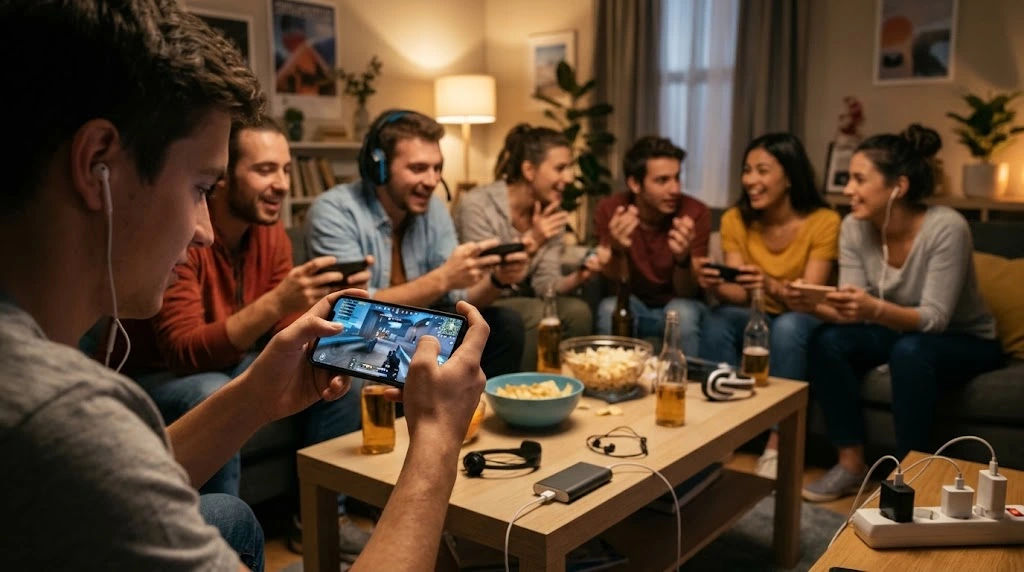 This development has raised an interesting question: can playing games actually help people become better at interacting with others?
The answer is yes, in many situations. Mobile gaming can provide opportunities to develop communication, teamwork, cooperation, patience, and problem-solving skills. Players often need to work together, share information, understand different opinions, and make decisions as a group. These activities can help improve social abilities that are useful in everyday life.
However, the benefits depend on how people play, which games they choose, and how much time they spend gaming. Although gaming can encourage positive social interactions, it cannot completely replace real-world communication and relationships. Understanding both its advantages and limitations helps people use gaming as a healthy social activity.
The Connection Between Gaming and Social Skills
Social skills are the abilities people use to communicate and interact effectively with others. These skills include listening, speaking, sharing, cooperating, understanding emotions, and resolving disagreements.
People develop social skills through regular interactions with family members, classmates, colleagues, and friends. Online gaming can create another environment where these abilities can be practised.
Many modern games include multiplayer features that allow participants to communicate through text messages, voice chats, and in-game activities. Players may need to complete missions, achieve shared objectives, or compete against other teams.
These situations encourage interaction. Players learn that success often depends on understanding their teammates and responding appropriately to different situations.
For example, a player participating in a team-based adventure game may need to explain a strategy, listen to instructions, and help another participant complete a difficult mission. Such experiences can encourage useful communication habits.
How Mobile Gaming Develops Communication Skills
mobile gaming Communication is one of the most important parts of healthy social relationships. People need to express their thoughts clearly, understand instructions, and listen carefully when others are speaking.
Multiplayer games create regular opportunities to practise these abilities.
Encouraging Clear Communication
In team-based games, players frequently exchange information about their progress, objectives, and strategies. They may need to explain where an opponent is located, request assistance, or suggest a better approach.
These conversations encourage players to communicate in a direct and understandable way.
For example, during a competitive match, a player might tell teammates when to move forward or when to protect a particular area. Giving clear instructions helps the entire group work more effectively.
Over time, these communication experiences can improve confidence when interacting with other people.
Improving Listening Skills
Communication involves more than speaking. Listening is equally important.
Players must pay attention to teammates' suggestions, understand instructions, and respond to important information. Ignoring other participants can create confusion and make it difficult to achieve shared goals.
Through repeated interactions, players may become more aware of the importance of listening before responding.
This ability can also be useful in classrooms, workplaces, and personal relationships.
Building Confidence in Conversations
Some people feel uncomfortable starting conversations with unfamiliar individuals. Online gaming can provide a comfortable environment for practising communication.
Players can interact with others through shared interests rather than feeling pressured to discuss unfamiliar subjects.
For shy individuals, these interactions may provide an opportunity to express opinions, ask questions, and participate in group discussions.
However, online confidence should gradually be supported by real-world communication experiences.
Developing Teamwork Through Multiplayer Games
Teamwork means working with other people to achieve a common objective. It requires cooperation, responsibility, communication, and respect.
Many multiplayer games depend on teamwork because individual players cannot complete every task independently.
Learning to Work Toward Shared Goals
In cooperative games, participants often receive different responsibilities. One player may protect the team, another may collect resources, and someone else may complete important objectives.
Each contribution supports the overall result.
Players gradually understand that individual success is connected to group performance. They learn to coordinate their actions and consider what other team members need.
These lessons can be valuable in school projects, sports activities, and professional environments.
Different Responsibilities
Successful teamwork requires people to understand their responsibilities.
Games often assign different roles to participants. Players must learn what their roles involve and how their actions affect the rest of the team.
For example, a player responsible for supporting teammates may need to focus on helping others rather than achieving individual rewards.
This encourages a sense of responsibility and teaches players to appreciate different contributions.
Learning to Trust Other People
Trust is essential for successful cooperation. Players must often depend on teammates to complete important tasks.
When participants communicate honestly and fulfil their responsibilities, they gradually develop confidence in one another.
This experience can help people understand why reliability and cooperation matter in relationships.
Can Gaming Improve Emotional Intelligence?
Emotional intelligence refers to the ability to recognize, understand, and manage emotions. It also involves understanding how other people feel and responding appropriately.
Although gaming does not automatically develop emotional intelligence, social interactions within games can provide opportunities to practise it.
Other People's Feelings
Players may encounter teammates who feel frustrated, disappointed, excited, or nervous.
Learning to respond respectfully to these emotions can encourage empathy.
For instance, if a teammate makes a mistake during an important match, responding with encouragement instead of criticism can help maintain a positive environment.
Players who regularly practise supportive communication may become more aware of how their words affect others.
Managing Frustration and Disappointment
Losing a game or failing to complete a mission can create disappointment.
Players need to manage these feelings rather than blaming teammates or reacting aggressively.
Learning to remain calm after setbacks can encourage emotional control.
These experiences may also teach an important life lesson: mistakes are part of learning, and failure does not mean that future success is impossible.
Practising Patience
Some games require players to wait for teammates, repeat difficult tasks, or follow instructions before taking action.
These situations encourage patience.
Players may discover that rushing decisions or becoming angry can negatively affect group performance.
Patience is equally important when communicating with friends, family members, classmates, and colleagues.
Building Friendships Through Online Gaming
Friendship often develops through shared experiences, regular communication, and common interests.
Online games can bring people together even when they live in different cities or countries.
Connecting With People Who Share Similar Interests
Gaming communities allow individuals to meet others who enjoy similar activities.
Players can discuss strategies, exchange experiences, and participate in group challenges.
Shared interests provide a natural starting point for conversations and can help friendships develop over time.
Maintaining Existing Friendships
Friends do not always have opportunities to meet in person because of school, work, family responsibilities, or distance.
Playing together can provide an enjoyable way to stay connected.
Friends can communicate, laugh, solve challenges, and share memorable experiences while participating in multiplayer activities.
This can help maintain relationships when direct meetings are not possible.
Meeting People From Different Backgrounds
Online gaming communities often include participants from different cultures, languages, and communities.
Interacting with people who have different experiences can help players become more open-minded.
They may learn to respect different opinions, understand unfamiliar customs, and communicate with people outside their usual social circles.
However, players should always remember that online identities are not automatically trustworthy. Privacy and personal safety must remain priorities.
Improving Problem-Solving and Decision-Making Skills
Social interactions frequently involve solving problems together. People must discuss challenges, consider different opinions, and decide how to move forward.
Many multiplayer games encourage these activities.
Finding Solutions as a Team
Players often encounter difficult missions that require several attempts to complete.
Instead of depending on one person, teammates may discuss possible solutions and combine their ideas.
This encourages collaborative thinking.
Players learn that different people can approach the same problem in different ways, and combining those approaches may produce better results.
Making Decisions Under Pressure
Some competitive games require quick decisions.
Players may need to choose between protecting teammates, completing an objective, or changing their strategy.
These situations encourage quick thinking and awareness of other people's actions.
However, players should understand that decisions made in games do not always reflect the complexity of real-world situations.
Respecting Different Opinions
Team members may disagree about which strategy is best.
Learning to discuss disagreements respectfully can improve social understanding.
Players can explain their opinions, consider alternative suggestions, and decide on a shared approach.
This ability is valuable in almost every area of life.
How Different Types of Games Encourage Social Interaction
Not every game offers the same opportunities for social development. Some focus on teamwork, while others encourage creativity, competition, or communication.
Cooperative Games
Cooperative games require players to work together instead of competing against one another.
Participants may complete missions, solve puzzles, or achieve common objectives.
These games can encourage cooperation, patience, communication, and shared responsibility.
They are particularly useful for players who want to practise working with others.
Multiplayer Strategy Games
Strategy games require players to plan their actions and coordinate with teammates.
Participants may discuss different approaches, manage resources, and make decisions together.
These activities can encourage logical thinking and constructive discussions.
Social Simulation Games
Social simulation games allow players to create characters, build communities, and interact with other participants.
Depending on the game, players may participate in shared activities, exchange ideas, and develop virtual relationships.
These environments can encourage creativity and social interaction.
Competitive Team Games
Competitive games often divide participants into teams.
Players must communicate, coordinate their actions, and support one another to achieve better results.
Although competition can be exciting, it is important to maintain respect for opponents and teammates.
Healthy competition should encourage improvement rather than hostility.
The Role of Parents and Teachers in Social Development
Parents and teachers can help children use gaming in ways that encourage positive social development.
Instead of treating every game as a negative activity, adults can focus on selecting suitable games and establishing healthy boundaries.
Choosing Age-Appropriate Games
Not every online game is suitable for every age group.
Parents should check game content, communication features, privacy settings, and age recommendations before allowing children to participate.
Games with positive teamwork features and suitable community environments may offer better opportunities for social learning.
Encouraging Positive Online Behaviour
Children should understand the importance of treating other players respectfully.
They should avoid bullying, offensive language, cheating, and aggressive behaviour.
Parents can explain that good manners matter online just as much as they do during face-to-face conversations.
Balancing Gaming With Real-Life Activities
Gaming should be one part of a balanced lifestyle.
Children also need opportunities to participate in sports, family activities, classroom discussions, and outdoor play.
These experiences provide important opportunities to practise communication and emotional understanding.
Adults should encourage children to maintain a healthy balance rather than allowing gaming to replace other activities.
Possible Negative Effects on Social Skills
Although gaming can provide social benefits, excessive or unhealthy use may create problems.
Understanding these risks is important for developing healthy habits.
Reduced Face-to-Face Communication
Spending too much time interacting through screens may reduce opportunities for direct conversations.
Face-to-face communication involves body language, facial expressions, eye contact, and emotional awareness.
These abilities are not fully developed through online interactions alone.
People should make time for in-person relationships and activities.
Online Bullying and Negative Behaviour
Some gaming communities contain players who use insulting language, threaten others, or deliberately create unpleasant experiences.
Repeated exposure to such behaviour can affect confidence and emotional well-being.
Players should use blocking and reporting features when necessary and avoid participating in harmful conversations.
Excessive Competition
Competition can motivate players, but excessive focus on winning may create frustration and conflict.
Some individuals may blame teammates, refuse to cooperate, or become disrespectful after losing.
Learning to accept defeat and appreciate other people's efforts is an important part of healthy social development.
Gaming Addiction and Social Isolation
Spending excessive time playing games can interfere with sleep, education, responsibilities, and personal relationships.
When gaming becomes difficult to control and begins affecting everyday life, it may indicate problematic gaming behaviour.
Maintaining regular routines and setting reasonable time limits can help prevent these problems.
Practical Ways to Use Gaming to Improve Social Skills
People can make their gaming experiences more socially valuable by following a few simple practices.
1. Choose cooperative experiences: Participate in games that encourage teamwork and shared objectives.
2. Communicate respectfully: Use positive language when speaking with teammates and avoid unnecessary arguments.
3. Practise active listening: Pay attention to instructions and consider other players' suggestions.
4. Support other participants: Encourage teammates when they experience difficulties instead of criticizing their mistakes.
5. Accept different opinions: Understand that people may have different strategies and perspectives.
6. Develop friendships carefully: Build connections gradually and avoid sharing private information with strangers.
7. Maintain a healthy schedule: Make sure gaming does not interfere with school, work, exercise, sleep, or family responsibilities.
8. Participate in real-world activities: Use the confidence and communication habits developed online in everyday social situations.
Following these practices can make gaming a more positive and meaningful social experience.
Is Mobile Gaming Helpful for Introverts?
Introverts sometimes prefer smaller social groups or need more time to become comfortable around unfamiliar people.
Online multiplayer environments may provide a less intimidating way to begin interacting with others.
Players can participate in conversations based on shared activities without feeling pressured to maintain constant communication.
For example, an introverted student might gradually become comfortable discussing strategies with teammates before developing stronger friendships.
However, introversion is not a problem that needs to be corrected. People have different social preferences, and both quiet and outgoing individuals can develop excellent communication skills.
Gaming should provide additional opportunities for interaction rather than become the only way someone connects with others.
Can Social Skills Learned Through Gaming Transfer to Everyday Life?
One important question is whether the abilities developed during gaming can be used outside the virtual environment.
The answer depends on whether players actively apply what they learn.
For example, someone who becomes comfortable giving instructions during team activities may also become more confident participating in classroom projects.
A player who learns to manage disagreements respectfully may use similar communication habits when discussing problems with friends.
Likewise, teamwork developed through cooperative activities may help individuals contribute more effectively during group assignments.
However, transferring these skills requires practice. Real-world relationships involve complex emotions, responsibilities, physical communication, and situations that games cannot fully reproduce.
Combining online experiences with everyday social activities offers a more balanced approach to personal development.
The Future of Gaming and Social Development
Gaming technology continues to create new ways for people to communicate and interact.
Multiplayer communities, virtual environments, and collaborative experiences are becoming increasingly common.
These developments may create additional opportunities for people to meet others, participate in shared activities, and practise communication.
Educational games may also become more useful in classrooms by encouraging students to solve problems together and communicate effectively.
Nevertheless, technology should support human relationships rather than replace them.
The most valuable experiences will come from combining digital interaction with meaningful real-world connections.
Conclusion
So, can playing games improve social skills? Yes, it can provide valuable opportunities to develop communication, teamwork, cooperation, emotional awareness, patience, and problem-solving abilities.
Through multiplayer experiences, people can learn to express their thoughts, listen to others, respect different opinions, and work toward shared objectives. They can also build friendships, maintain existing relationships, and interact with individuals from different backgrounds.
Mobile gaming can be particularly helpful when players choose suitable games and participate in positive online communities. However, these benefits are not automatic. They depend on individual behaviour, the gaming environment, and the amount of time spent playing.
It is equally important to recognize the possible disadvantages, including online bullying, excessive competition, reduced face-to-face interaction, and unhealthy gaming habits.
The best approach is to treat gaming as an additional opportunity for social development rather than a replacement for real-world relationships. Players should balance their screen time with family conversations, friendships, education, physical activities, and community involvement.
When used responsibly, gaming can become more than entertainment. It can provide an enjoyable environment where people practise important interpersonal abilities, develop confidence, and learn how to cooperate with others.
Ultimately, strong social skills develop through consistent practice in different situations. Gaming can contribute to that journey, but meaningful relationships also require kindness, understanding, respect, and communication in everyday life.