When choosing workwear, the material matters just as much as the design. Custom aprons for business are available in several fabrics, and each material offers different benefits in terms of comfort, durability, appearance, cleaning, and cost. The right fabric depends on where the apron will be used and what kind of work employees perform.
Restaurants, cafés, bakeries, catering companies, salons, workshops, retailers, and other businesses may all have different requirements. A chef may need a thick, heat-resistant apron, while a café employee may prefer something lightweight and comfortable for long shifts.
Understanding what custom aprons for business are made from makes it easier to choose an apron that looks professional while also standing up to everyday use.
Why Does Apron Material Matter?
An apron is not simply a piece of clothing worn over a uniform. It protects clothing from spills, stains, dirt, grease, and other workplace messes. At the same time, it contributes to the overall appearance of a business.
The material determines how an apron feels against the body, how long it lasts, how easily it can be washed, and how well it holds its shape.
For example, a heavy cotton apron can provide excellent durability but may feel warmer during a long shift. A polyester blend may be lighter and easier to maintain. Denim can provide a fashionable and rugged appearance, while canvas is useful when extra strength is important.
That is why businesses should consider function before choosing the fabric for their custom aprons for business.
Common Materials Used for Custom Business Aprons
There is no single material used for every business apron. Manufacturers commonly use several types of natural and synthetic fabrics.
Cotton
Cotton is one of the most popular choices for custom aprons for business. It is a natural fabric that feels comfortable and breathable, making it suitable for employees who wear aprons for several hours at a time.
Cotton also has a soft feel and can provide a traditional, professional appearance. It is particularly common in restaurants, cafés, bakeries, food markets, and hospitality businesses.
One advantage of cotton is that it can be customized with embroidery, screen printing, patches, and other branding methods.
However, cotton can absorb liquids and stains. It may also require more care than some synthetic materials. Businesses that deal with heavy grease or frequent spills may therefore prefer a cotton blend or another fabric.
Polyester
Polyester is another common material used in custom aprons for business. It is a synthetic fabric known for durability and resistance to shrinking and wrinkling.
Polyester aprons are often practical for businesses where employees need a neat appearance throughout the workday. They can also be easier to maintain because the material generally dries relatively quickly.
One possible disadvantage is breathability. Depending on the fabric construction, polyester can feel warmer than cotton.
For workplaces where employees move around constantly or work in warm environments, the weight and weave of the polyester fabric should be considered carefully.
Cotton-Polyester Blends
A cotton-polyester blend combines qualities from both fabrics. This makes blended materials a popular option for custom aprons for business.
Cotton can provide comfort and breathability, while polyester can add durability, wrinkle resistance, and easier maintenance.
The exact performance depends on the ratio of the two fibers. A fabric with more cotton may feel softer and more breathable, while a fabric with more polyester may offer greater resistance to wrinkles and shrinking.
For many restaurants and hospitality businesses, a blend provides a practical balance between comfort and durability.
Denim
Denim is often selected for custom aprons for business when a company wants a rugged, modern, or premium appearance.
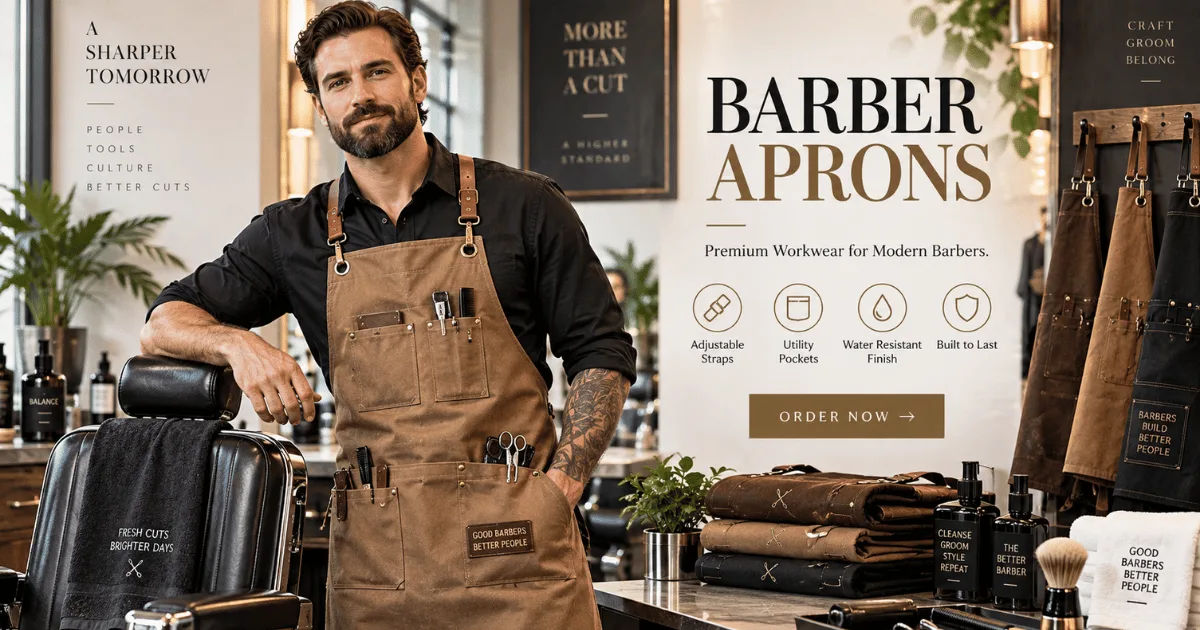
Denim is relatively strong and can handle regular use. Its distinctive appearance also works well for cafés, restaurants, coffee shops, barbershops, retail stores, and artisan businesses.
Denim aprons can create a casual but polished look, especially when combined with leather straps, contrasting stitching, or embroidered branding.
The downside is that heavier denim can be less comfortable in hot environments. Businesses should therefore consider the fabric weight before choosing denim for employees who work long shifts.
Canvas
Canvas is a tightly woven fabric known for strength and durability. It is commonly used when custom aprons for business need to withstand demanding working conditions.
Canvas can be particularly useful in workshops, craft businesses, gardening environments, studios, and some food-service settings.
Its sturdy construction makes it less delicate than lightweight fabrics. However, heavy canvas can also feel stiff or warm compared with lighter cotton fabrics.
Canvas is therefore best suited to businesses where durability is more important than having an extremely lightweight apron.
Linen
Linen provides a lightweight and breathable option. It has a natural texture that can give custom aprons for business a sophisticated or relaxed appearance.
It can work particularly well in boutique cafés, bakeries, restaurants, hotels, and businesses that want a more refined visual identity.
Linen is comfortable in warm conditions, but it wrinkles more easily than polyester. Businesses choosing linen should be comfortable with its naturally relaxed appearance or be prepared for additional maintenance.
Are Custom Aprons Made From Waterproof Materials?
Not all custom aprons for business are waterproof. However, some can be made from water-resistant or coated fabrics.
Water-resistant materials can help protect clothing from splashes and spills. This can be useful in kitchens, cleaning environments, workshops, and food-preparation areas.
Some aprons use synthetic materials or special coatings to improve resistance to moisture. Others may use fabrics designed to dry quickly.
It is important to understand the difference between water-resistant and waterproof. A water-resistant apron may repel small amounts of liquid but may not provide complete protection during prolonged exposure.
Businesses should choose the level of protection according to the actual working environment.
How Durable Are Different Apron Materials?
Durability depends on more than the name of the fabric. The fabric's weight, weave, stitching, construction, and quality all influence how long custom aprons for business will last.
Heavy cotton, denim, and canvas can provide excellent durability when properly constructed. Polyester and blended fabrics can also perform well under frequent washing and daily use.
The quality of the stitching is particularly important around pockets, straps, waist ties, and other areas that experience repeated stress.
A cheap apron made from strong fabric may still fail quickly if its stitching and construction are poor. For business use, overall garment quality matters just as much as fabric choice.
Which Material Is Best for a Restaurant?
Restaurants often require custom aprons for business that balance protection, comfort, durability, and professional appearance.
Cotton and cotton-polyester blends are common choices because they offer a practical combination of comfort and easy maintenance.
For chefs or kitchen staff, a heavier fabric may provide better protection from spills and food particles. Front-of-house employees may prefer a lighter apron because their primary concern is often appearance and comfort.
Restaurants should also consider how frequently aprons will be washed. If an apron will go through commercial laundry cycles regularly, selecting a durable fabric and strong construction is especially important.
Which Material Is Best for Cafés?
Cafés often have more flexibility when choosing custom aprons for business because employees may not face the same level of heat, grease, or heavy food preparation as kitchen staff.
Cotton, denim, linen, and cotton blends can all work well.
Denim is particularly popular when a café wants a modern, handcrafted, or specialty-coffee appearance. Cotton can provide a more traditional and comfortable option.
The best choice ultimately depends on the café's brand image, climate, employee comfort, and cleaning routine.
What Materials Work Well for Outdoor Businesses?
Outdoor businesses may need custom aprons for business that are strong enough to handle dirt, dust, moisture, and frequent movement.
Canvas and heavier cotton blends can be useful when durability is the main concern. Synthetic blends may be preferable when faster drying and easier maintenance are important.
Outdoor workers may also benefit from adjustable straps and practical pockets. The fabric should not only look good but should allow employees to move comfortably throughout the workday.
How Are Aprons Customized?
The fabric is only one part of custom aprons for business. Companies can personalize aprons with logos, employee names, slogans, colors, and other branding elements.
Embroidery is a popular option for creating a professional and durable appearance. It can work especially well on thicker fabrics such as denim and canvas.
Screen printing and other printing methods can be suitable for larger logos or detailed designs. The best method depends on the fabric, artwork, number of colors, and desired appearance.
Businesses should also consider the placement of their logo. A logo positioned on the chest may be more visible during customer interactions, while larger branding on the front can create a stronger visual presence.
How Should Businesses Choose the Right Fabric?
Choosing custom aprons for business should begin with the working environment rather than the logo or color.
Consider what employees are exposed to during a typical shift. Do they deal with grease, water, dust, heat, food, chemicals, or general dirt?
Next, consider comfort. Employees may wear an apron for six, eight, or even more hours, so a material that looks excellent but feels uncomfortable may not be a good choice.
Cleaning requirements are equally important. If aprons need frequent washing, select a fabric that can withstand repeated laundering without quickly losing its shape or appearance.
Finally, consider brand identity. A high-end restaurant may want refined linen or premium cotton, while a workshop may benefit more from rugged canvas.
Does Fabric Weight Matter?
Yes. Fabric weight can significantly affect how custom aprons for business feel and perform.
Lightweight fabrics are generally easier to wear for extended periods and may be more comfortable in warm weather. Heavier fabrics usually offer greater structure and durability but can feel warmer.
There is no universally perfect weight. A business should match the fabric weight to its environment and employees' daily tasks.
A kitchen with high temperatures may require a different approach from an outdoor workshop or an air-conditioned retail store.
How Important Is Comfort?
Comfort should never be treated as an afterthought when ordering custom aprons for business.
An apron that constantly pulls at the neck, feels too heavy, or restricts movement can become irritating during a long shift.
Adjustable neck straps, suitable waist ties, practical sizing, and breathable materials can all improve comfort.
Businesses should also think about how employees move. Someone working behind a counter may have different requirements from someone constantly bending, lifting, reaching, or walking.
What Is the Best Material Overall?
There is no single best material for all custom aprons for business.
Cotton is a strong general-purpose option when comfort and breathability are priorities. Polyester can be useful when easy maintenance and wrinkle resistance matter.
Cotton-polyester blends offer a balanced solution for many businesses. Denim works well for a stylish and durable look, while canvas is a stronger choice for demanding environments.
Linen can be excellent when lightweight comfort and a refined appearance are important.
The right decision comes down to matching the material to the job.
Conclusion
Choosing the right material for custom aprons for business is about much more than picking a fabric that looks attractive. The apron needs to perform properly in the environment where it will be used.
Cotton offers comfort and breathability. Polyester provides durability and easy maintenance. Blended fabrics balance several useful qualities. Denim gives businesses a distinctive and rugged appearance, while canvas provides extra strength. Linen offers a lightweight and sophisticated alternative.
Before placing a large order, businesses should think about employee comfort, cleaning frequency, workplace conditions, durability, customization, and brand image.
The most expensive fabric is not automatically the best choice. Likewise, the cheapest option may become more expensive over time if it needs frequent replacement.
Good custom aprons for business should protect clothing, support employees during their daily work, and present a consistent professional image to customers. When the material is selected based on real working conditions rather than appearance alone, the apron becomes a useful part of the uniform instead of simply another branded item.